Medicine
·7 min read
Tabaco / Mapacho — The Sacred Tobacco of the Amazon and Andes
The tobacco used in indigenous ceremony is not the same plant as a cigarette. It is the most widely used sacred medicine in the Americas — older than ayahuasca itself. What it is, how it's used, and why it matters.
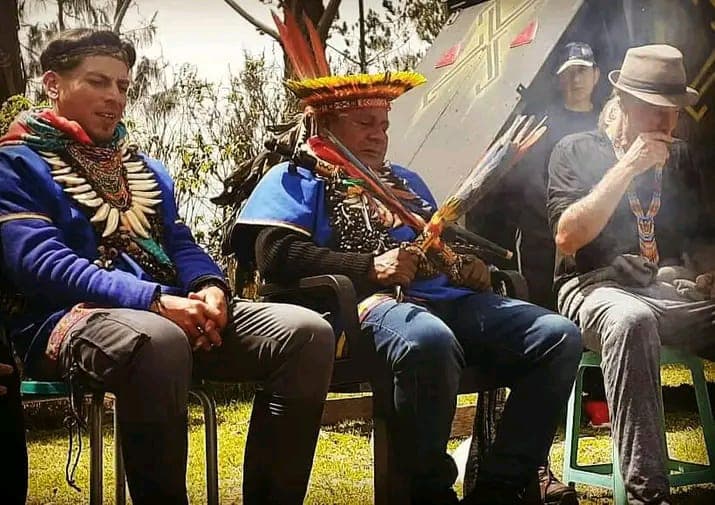
If you've sat in any traditional indigenous ceremony in the Americas, you've smelled mapacho. The thick smoke of dark hand-rolled tobacco is the constant background of the work — and a medicine in its own right, far older and more widely used than ayahuasca, San Pedro, or any other ceremonial plant.
Mapacho is not the tobacco in your cigarette
Almost every cigarette sold in the world is made from Nicotiana tabacum — the cultivated, mass-produced, chemically treated species. Mapacho is Nicotiana rustica, an unrelated species, native to the Amazon and traditionally cultivated by indigenous peoples for ceremony only. Two important differences:
- Mapacho contains roughly 9 to 18 times more nicotine than commercial tobacco — strong enough to cause visions on its own at high doses
- Mapacho contains compounds (including small amounts of MAOIs) that interact with the nervous system in ways commercial tobacco does not
- Mapacho is grown without pesticides, dried slowly over wood fires, and rolled by hand — no chemical additives
It is, in our tradition, considered the master plant — the plant that teaches the other plants. Many indigenous teachers say a curandero must first study tabaco for years before being permitted to learn ayahuasca.
How tabaco is used in ceremony
1. Smoke (humo)
The most common form. The Taita rolls a thick mapacho cigarette, lights it from the fire, and uses the smoke to bless people, objects, and the four directions. Smoke is blown over the crown of the head, into the heart, into the cup of medicine, and around the edges of the maloka. In a longer Ayahuasca night, you may see the Taita smoking continuously across the entire ceremony — directing energy, calling specific spirits, clearing what surfaces.
2. Rapé (snuff)
Powdered mapacho mixed with the ash of specific medicinal trees and aromatic herbs. It is blown into both nostrils through a hollow tube — called a tepi (when blown by another person) or a kuripe (when self-applied). The effect is immediate: a strong rush of energy, sharp head clearing, watery eyes, sometimes deep emotional release. Rapé is used to ground a participant who is drifting in ceremony, to wake a tired body, or to mark a transition point in the night.
3. Ambil (paste) and concentrated juice
Less commonly used by visitors but worth knowing about. Ambil is a thick black tobacco paste, traditionally licked from the back of a finger — used in some Putumayo and Cofán traditions. Concentrated tobacco juice is sometimes drunk in small ceremonial doses by initiated practitioners (do not try this on your own — toxic at non-trivial doses).
What participants experience
Most visitors to our retreats encounter mapacho as smoke and (optionally) as rapé. The smoke is unobtrusive — present, but not demanding. Rapé is intense for about 60 seconds — a sharp head pressure, watering eyes, sometimes a wave of nausea — and then settles into a lasting clarity that participants often describe as 'sharpened presence' for several hours afterward.
We never apply rapé to anyone without explicit consent and a brief conversation about what to expect. It is offered, not imposed.
The relationship between tabaco and the other medicines
Tabaco is the universal accompaniment. It is the smoke during Ayahuasca. It is the morning blessing before San Pedro. It is the closing prayer over the temazcal stones. It is the medicine that introduces every other medicine. In our circle, the Taita carries tabaco as constantly as a doctor carries a stethoscope — it is the basic instrument of the work.
If you are sensitive to nicotine or generally avoid it, the smoke from a typical ceremony will not affect you significantly — it is brief and ventilated. If you have respiratory conditions, let us know in advance and we will keep distance.
A word about respect
Mapacho is not a recreational substance and is not used to create a tobacco habit. The traditions that use it have very specific protocols about who may handle it, who may grow it, and who may use it for ceremony work. As participants, our role is to receive it with attention. Most people who experience mapacho in a real ceremonial context describe it as nothing like the cigarettes they know — and many find that the sense of the plant they encounter in ceremony permanently changes their relationship to commercial tobacco afterward.
◦ the master plant ◦ teacher of all the other teachers ◦
◦
Ready to talk?
If something here resonates, write to us. We'd rather have the long conversation now than after.
Contact usContinue reading
Medicine
Kambo Frog Medicine — A Complete Guide to the Amazon's Deep Cleanse
What Kambo is, where it comes from, what the science says about its peptides, who it's for, who it's not for, what the twenty minutes actually feel like, and what to expect in the seven days afterward.
Read articleMedicine
Sananga Eye Drops — The Amazonian Vision Medicine Nobody Warns You About
Made from the roots of an Amazonian shrub, Sananga is dropped directly into the eyes — burns intensely for two minutes, and is said to clear vision, focus, and emotional fog. What it is, why we use it, and what to actually expect.
Read article