Guide
·11 min read
How to Find a Legitimate Ayahuasca Shaman — The Red Flags That Should Make You Walk Away
The Ayahuasca retreat market has tripled in five years. The number of trained traditional shamans has not. A direct, sometimes uncomfortable, guide to recognizing the difference — written by people who know the ones who actually do this work.
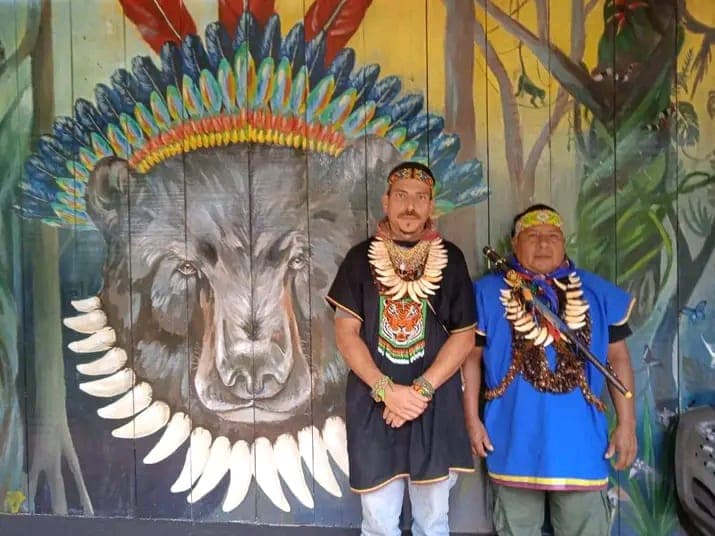
Twenty years ago, finding a shaman to drink Ayahuasca with required leaving your country and walking through the jungle for two days. Today you can book a retreat from your phone in three minutes. The medicine is the same. The world around it has changed enormously. If you are about to entrust your nervous system to a stranger, here is how to make sure that stranger has earned the trust.
What 'legitimate' actually means
There is no global certification body. There is no diploma program. Indigenous shamanic training is an apprenticeship that takes 10 to 30 years inside a specific cultural and territorial tradition — Cofán, Shuar, Shipibo, Kichwa, Quechua, Yawanawá, Asháninka, Matsés, and many others. A 'legitimate' shaman is someone who has been:
- Recognized by their own elders and community as a curandero/curandera
- Trained in the specific lineage they claim — not a hybrid of YouTube videos and a 6-month workshop
- Working in their tradition for many years, not months
- Vouched for by other practitioners outside their own circle
There are excellent non-indigenous facilitators who have apprenticed for decades within an indigenous lineage. There are excellent indigenous shamans operating outside their own communities. There are also a lot of grifters in both categories.
Green flags — what trustworthy practitioners do
- Their name and lineage are publicly verifiable. You can find them on the websites of multiple unrelated retreat centers, in academic papers, in indigenous community statements.
- They have a relationship with a specific community of origin and refer to it openly — names of elders, location, the river they are from.
- They charge appropriately. Real shamans are paid for their work — but they don't drive luxury cars or charge $15,000 per ceremony.
- They screen everyone before accepting them. They will say no to people whose health or psychiatric situation contraindicates the work. A shaman who 'works with everyone' is dangerous.
- They maintain dietary practices themselves and ask you to do the same.
- They speak quietly about their work. Their personality is not the product. The medicine is.
- They have a circle around them — assistants, family, students. Real shamanism is communal; it is not a one-person operation.
- They will answer hard questions about their training, their failures, and their disagreements with other practitioners.
Red flags — when to walk away
Marketing red flags
- Heavy emphasis on the shaman's personal brand. Mystique built around them as a guru, awakened being, 'the most powerful curandero in the Amazon,' etc.
- Promises of specific outcomes ('cures depression', 'heals trauma in one ceremony', 'awakens your highest self')
- Photos with celebrities or influencers as a primary credibility marker
- Vague answers about what tradition they trained in or under whom
- No public information beyond their own website and Instagram
Operational red flags
- No medical or psychiatric screening before booking
- Will accept you while you are on SSRIs without requiring tapering
- Will accept you while you are actively in a psychiatric crisis
- Group sizes of 20+ in a single ceremony with one shaman
- Mixing Ayahuasca with other psychoactive substances within the retreat (MDMA, mushrooms during the same night, etc.) — this is genuinely dangerous and not traditional
- Encourages drinking large doses early in your career with the medicine
- Charges for additional ceremonies you only learn about on arrival
Behavioral red flags during the retreat
- Claims he/she alone can heal you, that you need to come back many times for the medicine to 'finish' its work
- Sexually explicit comments, physical contact you didn't consent to, or removing your clothing
- Strong romantic or sexual attention from the shaman or facilitators
- Pressure to take more medicine than you want
- Pressure to stay longer / sign up for more retreats / spend more money
- Belittling or shaming you for asking questions or expressing doubt
- Discouraging you from speaking to your therapist, doctor, or family about the experience
How to verify before you book
- Search the shaman's full name in three search engines. Look beyond page one of results.
- Search 'shaman name + abuse', 'shaman name + scandal', 'shaman name + complaint'. Even one credible report should make you reconsider.
- Check independent retreat directories — Ayaadvisors.org has community-submitted reviews that are harder to fake.
- Ask the retreat to put you in touch with two former participants (not testimonials they choose — actual recent participants).
- Look for the retreat's relationship with broader networks — psychedelic.support, MAPS, ICEERS, the academic plant-medicine literature.
- If the retreat claims indigenous lineage, search for the specific community statements about that lineage. Some communities have public statements about who is and isn't authorized to carry their medicine.
- Trust your nervous system. If something feels off after a phone call or email exchange, listen.
Specific questions to ask before booking
- Who specifically will be leading every ceremony? (Get the name. Search it.)
- What is your medical and psychiatric screening process?
- Can I speak with two recent participants before booking?
- What is your protocol if someone has a medical emergency during ceremony?
- What is your protocol if someone has a psychiatric crisis during or after the retreat?
- Is your shaman insured? Are you?
- Are you registered as a business in Ecuador and tax-compliant?
- What happens if I need to leave early?
- What integration support exists after the retreat?
About our circle
We are not the only legitimate retreat in Ecuador. We are not even the most famous. We are one circle that holds the work the way our teachers taught us — Taita Alirio Causaluzán in the Cofán Yagé tradition, Taita Hernán Toapanta in the Andean Aguacolla tradition. Both are publicly verifiable, both have decades of practice, both have communities that vouch for them. We screen everyone. We refuse people who are not ready or who are unsafe to include. We have refused entire bookings two days before flights when something felt wrong in the intake.
If you don't book with us, find someone whose answers to the questions above are clear, specific, and don't make you feel like you are bothering them by asking. The work is sacred. The container has to match.
◦ a real shaman doesn't sell mystique ◦ they sell hours under the same fire ◦
◦
Ready to talk?
If something here resonates, write to us. We'd rather have the long conversation now than after.
Contact usContinue reading
Guide
What to Expect from Your First Ayahuasca Ceremony — An Honest Walk-Through
Hour by hour, what actually happens during a traditional Ayahuasca ceremony in the Ecuadorian highlands — from the afternoon arrival through dawn, including the parts most websites don't tell you about.
Read articleGuide
San Pedro vs Ayahuasca — Which Plant Medicine Is Right for You?
Both are sacred. Both are powerful. They do very different work. A comparison from a circle that holds both — covering tradition, day-of experience, intensity, and who tends to be drawn to which.
Read article